
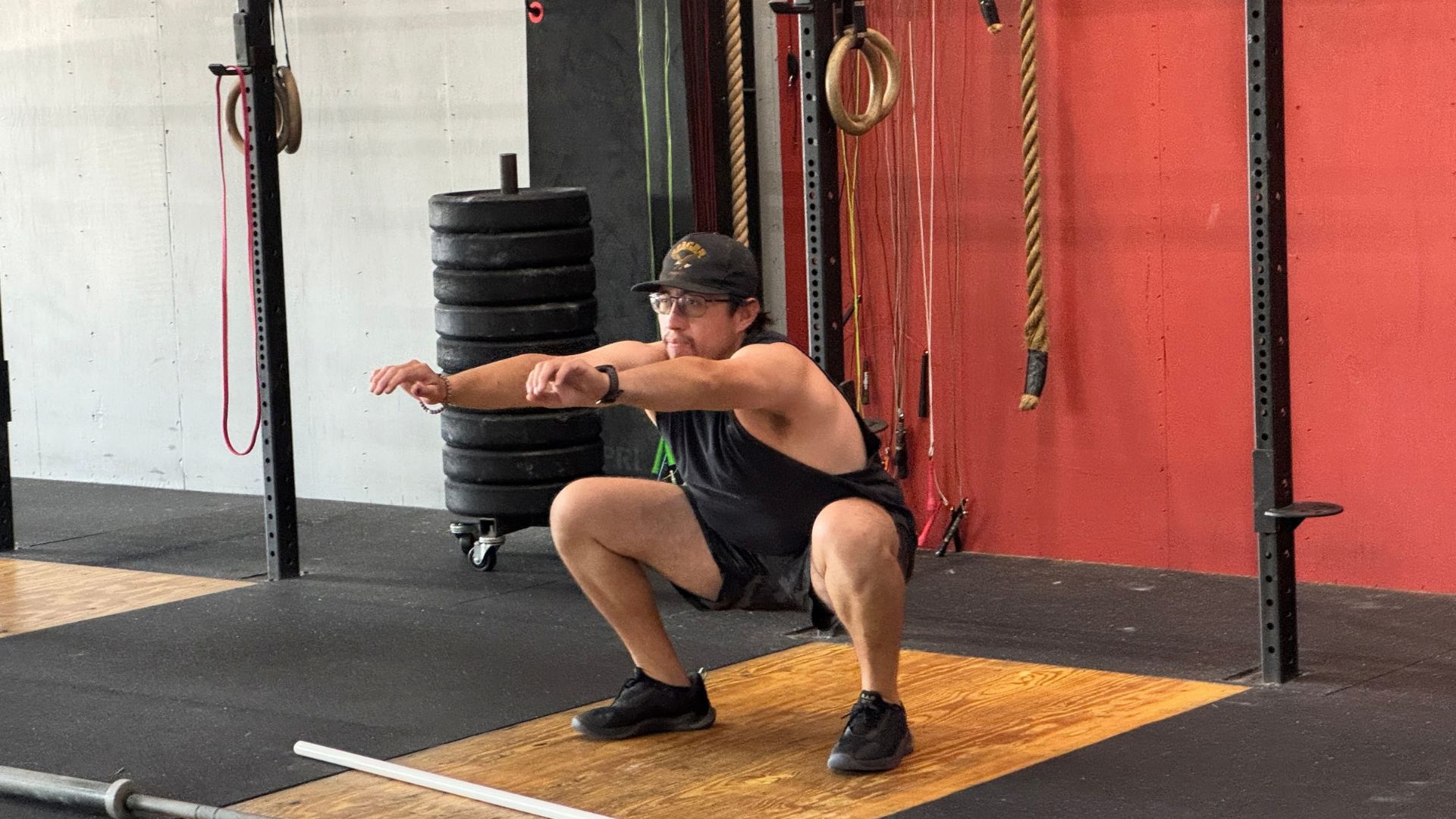
Some people who work out alone already know what they should be doing. The rest, do not know where to start or what they are really doing. For those that do know what they should be doing, struggle to keep pushing when it gets hard. Those that do not know what to do or what they doing inside of fitness, do not really know what pushing through the hard even means.
A one-hour structured fitness class solves that problem in a few different ways. Not through motivation posters or hype, but through simple things: a clear endpoint, a coach who is paying attention, and other people working alongside you. Here is why that combination works, and why it tends to work regardless of age or fitness level.
Why Most Solo Workouts Fall Apart Before They Finish
The most common reason people stop a solo workout early is not laziness. It is that they do not fully know what to do, and when something gets hard, there is nothing stopping them from skipping it. Nobody sees them quit. Nobody is there to keep them moving.
Inside a group class, that changes. When everyone around you is still working, you keep working. The social pressure is real, and it is useful. You push a little harder because stopping feels different when other people, just like you, are right there doing the same thing you are doing.
What a Fixed Endpoint Does to Your Brain During Exercise
When you can see the end coming, things get easier. When you have no idea how long something is going to last, your brain starts to protect you from the effort before you even need protecting.
Knowing you are coming in for one hour, and then you are done, changes how you approach the whole thing. You can commit to the intensity because you know it has a finish line. Solo workouts often do not have that. You end up going through the motions rather than actually pushing, because there is no defined moment where you get to stop. That defined window is what keeps the intensity where it needs to be.
The Physiology Behind One Hour of Structured Fitness
A well-built one-hour class covers a lot of ground. You come in, get a proper warm-up to loosen the muscles and get the body moving, then move into a strength piece, and then a workout that combines cardio and lifting together.
When the intensity is right and the stimulus is hit, one hour is enough. More than enough, actually. People are often surprised by how much they have done in that window when they were pushed appropriately throughout it. The structure is what makes the time efficient. You are not wandering between equipment or deciding what to do next. Every part of the hour has a purpose.
Why the Format Works Across Different Ages and Ability Levels
The one-hour format stays the same for everyone. What changes is everything inside it.
A newer member or someone returning after time off will do less weight, fewer reps, or move at a slower pace. Someone dealing with an injury or a movement limitation gets a modification that still builds the same strength the original movement was targeting. For example, a ring muscle-up is something most people cannot do, and that is completely fine. The modification is chosen to match what the movement is actually training, not just to make things easier.
The warm-up is universal because everyone needs it. The scaling is individual because everyone is different. That combination is what makes the class work for a 22-year-old athlete and a 58-year-old coming back to fitness in the same session.
How Group Accountability Fills the Gaps Willpower Leaves
Willpower runs out. That is not a character flaw, it is just how people work.
Even coaches have days where, if nobody else were around, they would stop mid-workout or skip it entirely. The group is what closes that gap. When other people are there, you get moving. When other people are still going, you keep going. It is not complicated, but it is consistent. The accountability that comes from training alongside others does something that personal motivation alone cannot always do, especially on the days when you are tired or distracted or just not feeling it.
What Coaches Actually Do in That Hour That Makes the Difference
A coach in a group class is not just someone who reads the workout off a whiteboard and cheers you on. The job is more specific than that.
Throughout the class, a good coach is watching your movement patterns, checking that your mechanics are sound, and deciding in real time whether you need to scale or modify what you are doing. They are also reading where you are at mentally and physically on that particular day. If you came in after a rough night or a hard week and you are clearly not fully present, a coach should recognize that and adjust the approach, maybe pulling back on the technical coaching and focusing on encouragement instead. If you come in energized and ready to push, that is the day to push you.
That kind of attention is what separates a coached class from a group exercise session. The coach is not just leading an hour. They are managing individuals inside that hour.
Choosing Structured Fitness Classes Over Going It Alone
If you are on the fence, the simplest thing to do is try a group class and see what it actually feels like compared to working out by yourself.
One pattern that shows up consistently in solo training is that people gravitate toward the things they are already good at. You do the movements you are comfortable with and quietly avoid the ones that are hard or unfamiliar. In a structured class, that is not an option. You will be asked to work on the things that challenge you, which is exactly how fitness improves across the board, not just in the areas where you were already strong.
The accountability, the structure, the coaching, and the group around you all push in the same direction. That is why the format works, and why it keeps working over time.
If you want to see what a coached one-hour class looks like in practice, come in and try one. CrossFit Heath offers classes for all fitness levels, and the coaching is there from the first session.

